


VENUE
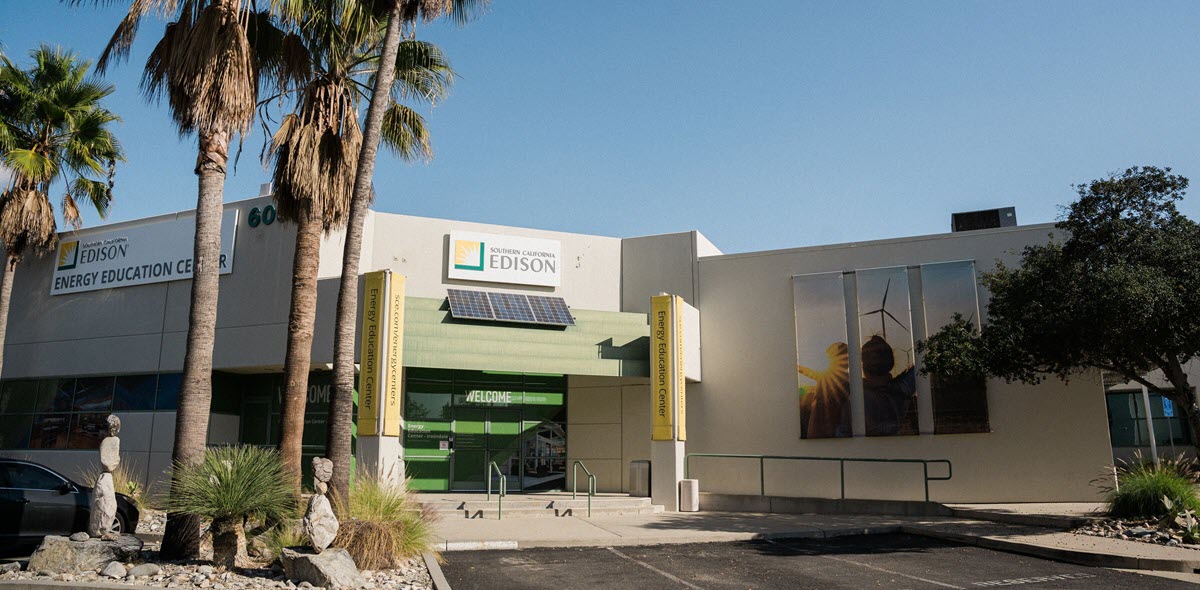
Southern California Edison
Energy Education Center
6090 N. Irwindale Ave.
Irwindale, CA 91702
REGISTRATION & MEALS
8:00 - 9:00 AM Registration and Light Breakfast
Morning and afternoon refreshments, as well as lunch will be provided for delegates.

NETWORKING EVENT
Tuesday, May 19
6:30 - 9:30 PM
The Raymond 1886
1250 S Fair Oaks Avenue
Street parking is available on Fair Oaks
Join fellow delegates for an evening of connection and conversation at The Raymond 1886. Set within a beautifully preserved Craftsman cottage rich with Pasadena history, this iconic venue offers a warm, elegant atmosphere for networking, dining, and meaningful exchanges in a truly memorable setting.
GRID TECHNOLOGY DEVELOPMENT LABS TOUR
Wednesday, May 20
1 PM - Depart for SCE's Grid Technology Lab
2:00 - 4:30 PM - Tour of SCE's Grid Technology Lab Facility
4:45 PM - Depart to return to Irwindale
Transportation is provided
Attendance is limited to pre-registered delegates
Take an exclusive tour of SCE’s Grid Technology Development Labs and discover the advanced facilities and breakthrough innovations driving the future of energy.
-
Testing Virtualized PAC Systems: Bridging the Gap Between Simulation and Field Deployment
9:30 - 10:00 AM
Zeus Xioco, Tesco & Nicole Rexwinkel, Southern California Edison
Power systems are becoming more complex today due to the integration of renewable energy, stricter reliability and security requirements, and the need to balance fluctuating demand across increasingly interconnected infrastructure. Utilities need solutions for protection, automation, and control (PAC) systems which can support the objectives of commissioning new substations faster, in a more compact footprint, and with more flexibility to adopt new technologies that address future grid challenges. Digitalization and virtualization of PAC systems can help address these challenges. This presentation will explore how hardware-in-the-loop (HIL) testing of these systems can be used to expedite the deployment of digital and virtual PAC systems by validating configurations in lab settings. The digitalization and virtualization of PAC systems create a greater dependency on network architecture and management, and it will be critical to incorporate test tools which closely replicate the network traffic generated by intelligent electronic devices (IEDs). These test environments can reduce risk, increase confidence, and lead to faster deployment of digital and virtual PAC systems.
-
Best Practices for Black Start Island Synchronization Using Real Time EMT Simulation
10:30 - 11:00 AM
Leila Chebbo, Dominion EnergyBlack start is critical to power system resilience, enabling utilities to recover from blackout events without relying on the external grid. One of the most challenging stages of restoration is island synchronization, during which energized islands must be safely reconnected while maintaining acceptable operating conditions. Although existing guidelines provide general recommendations, several key operational decisions remain insufficiently defined.
This work focuses on identifying best practices for island synchronization during black start, supported by real-time EMT simulation studies using RTDS. A framework for developing largescale RSCAD models of Dominion Energy’s transmission system with real-time Energy Management System (EMS) data is introduced and demonstrated through a case study.
The case study validates synchro-check relay settings across a wide range of operating conditions, identifying parameter thresholds that enable secure breaker closure. Beyond relay setting validation, the study evaluates the island energization level prior to synchronization, examining how generator and load pickup influence system readiness for reconnection. In addition, this work investigates the timing of generator control mode transitions, specifically whether the master generator should switch from isochronous to droop control before or after island synchronization.
The results provide practical guidance for improving synchronization reliability and supporting operator decision-making during system recovery.
-
Cyber Physical Substation Security: Insights from Real Time Digital Simulation
11:00 - 11:30 AM
Michael Breuhl, Southern Company
The electric grid is rapidly evolving through increased communications and automation, introducing new vulnerabilities and non‑traditional interactions between legacy power system equipment and modern, communication‑based technologies. Understanding these cyber‑physical interactions is essential to developing effective detection, mitigation, and protection strategies in an automated and intelligent grid environment.
This presentation describes how Southern Company uses real‑time simulation to safely evaluate emerging risks and research needs associated with this transformation. The Real Time Digital Simulator (RTDS) is used to support detailed power system modeling that represents power, protection, and communication elements to study system behavior. Communication emulation enables realistic interaction with external devices, replicating substation network behavior and improving visibility into grid communications under varying operating scenarios.
RTDS also supports application training, particularly for AI‑based tools, by generating fault and edge‑case scenarios that are rare in historical data and assist in defining normal versus abnormal system behavior. Through testing and hardware‑in‑the‑loop integration, applications and devices are evaluated in a realistic, real‑time environment prior to field deployment. Finally, impact analysis is performed to identify system vulnerabilities, assess potential outcomes of cyber events, and evaluate mitigation strategies before implementation. -
Why Hardware-in-the-Loop Testing is the Secret to Field-Ready SCADA
11:30 - 12:00 PM
Chathura Patabandi, Nayak Corporation & Darshan Lad, Nor-Cal ControlsThe complexity of modern utility-scale PV and storage projects requires a “test-early, test-often” philosophy. Hardware-in-the-Loop (HIL) simulations facilitate this by connecting real-time digital twins to physical SCADA controllers, enabling "test-early" validation that bridges the gap between design and field deployment for utility-scale solar projects. This process ensures IEEE 2800 compliance, reduces on-site troubleshooting, and mitigates risks by simulating edge cases and faults safely.
-
Recent Developments for the RTDS Simulator
1:00 - 1:45 PM
Kurtis Toews, Technical Sales Manager
The RTDS Simulator is continuously enhanced with new features, models, and tools to meet the evolving needs of the industry. This presentation will highlight recent new features, RSCAD enhancements, and planned future developments.
-
Leveraging RTDS Capabilities at NLR for Development, Derisking and Field Deployment of Microgrids and Distribution Grid Modernization Solutions
1:45 - 2:15 PM
Jay Sawant, National Laboratory of the Rockies
NLR has been using RTDS for several projects over the years. We want to highlight three key projects we have done with our partner utilities over the last 4 years in the distribution grid modernization space.
- DOE funded project on Field Deployment of Networked Microgrids with a Co-op utility in Colorado – NLR has been working with a co-op in Colorado in development and field deployment of networked microgrid solutions. RTDS capabilities have helped us in every step of the development, derisking and field deployment cycles. We intend to present our efforts in this space at the conference.
-
DOE funded project on Feasibility and HIL Assessment of Networked Microgrids with multiple co-ops in North America – NLR has been involved in EMT modeling and HIL testing of blackstarting and merging utility scale microgrids for several co-ops and IOUs in North America. We intend to present some HIL testing efforts in this space.
-
Private Partnerships with Utilities for Fault Localization Technologies – NLR has been working with vendors to help test and derisk their technologies on fault location identification. We have leveraged our RTDS capabilities for rapid testing and development of the vendor solutions. We intend to present our work aiding product development at the conference.
-
Streaming PMU Data for Real-Time Oscillation and Stability Monitoring in Microgrids – Proof of concept using RTDS
3:00 - 3:30 PM
Pablo Paz, The University of Texas at AustinSimulation of phasor measurement units (PMUs) in a microgrid using GTNET and stream the measurements to a server for real-time processing. A Kalman filter–based dynamic state estimator is implemented to track generator rotor angle (δ) and speed (ω) online. The estimated states are used to monitor inter-area and intra-area oscillatory modes and evaluate system stability under both grid-connected and islanded operating conditions.
-
Automated CHIL/PHIL Simulations of Modular SSSC Using RTDS: Python-Driven Fault Sweeps, GTNET Integration, and Dynamic Relay Relocatio
3:30 - 4:00 PM
Rohit Jinsiwale, SmartwiresThis presentation covers an automated CHIL/PHIL testing framework developed by Smart Wires for validating SmartValve™ (m-SSSC) devices using RTDS. The framework has been applied across several actual projects, automating large-scale fault sweep campaigns via Python scripting and a SQL database pipeline. GTNET cards enable real-time communication between physical SmartValve controllers and the RSCAD model, while RSCAD draft variables allow dynamic relocation of protection relays to different network lines without any physical rewiring in the lab — enabling scalable, reproducible protection coordination testing from a fixed hardware setup.
Wednesday, May 20
-
Data Center Modelling and Sample Case Demo
9:00 - 10:00 AM
Christian Jegues, Principal Applications Engineer
This presentation explores how the RTDS simulator can be applied to accurately model data centers, addressing their defining characteristics and key modeling challenges. Using results from a detailed data center simulation, it will also outline the evolving modeling requirements needed to support next‑generation data center architectures.
-
Digital Real Time Simulation Modeling of Data Center Architectures for Controller and Power Hardware-in-the-Loop Experiments
10:00 - 10:30 AM
Kumaraguru Prabakar, National Laboratory of the Rockies
Data centers are industrial power systems with thousands of power and control components inside the campus. These power and control components interact with each other to enable highly reliable data center power system. Typically, there are breaker controls, protection devices, and a power flow management system that operates the power system. These devices contain thousands of lines of codes and it is important that these systems are modeled, simulated and evaluated appropriately for reliable and resilient operation. This presentation will present the details of the data center modeled, different components modeled and simulated in hardware-in-the-loop, goals of the simulations, and the value it presents to the user.
-
RTDS for Testing Next-Generation Power Systems: from Microgrids to Data Centers
10:45 - 11:15 AM
Farhad Elyasi & Arian Azizi, Danovo Energy Solutions
This presentation demonstrates RTDS applications for testing advanced power systems, including CHIL-based validation of microgrid controls and protection, and emerging data center challenges such as evaluating PPC performance under AI-driven load fluctuations.
-
Characterization of Mega-Watt Scale Solid State Transformer (SST) using PHIL for Data Center Application
11:15 - 11:45 AM
Harsha Ravindra, Florida State University
-
Need for Testing IBR Integration for Improved Grid Reliability
11:45 - 12:15 PM
Aung Thant, North American Electric Reliability Corporation
Many reliability gaps associated with IBRs can be traced back to gaps in commissioning and testing prior to commercial operation. NERC Inverter-based Resource Performance Subcommittee (IRPS) is developing a white paper to provide state of the art practices and solutions to test and evaluate IBR design to help derisk integration of IBR projects before commissioning.
Thursday, May 21
-
Evaluating RTDS Arc Fault Modeling for High Impedance Faults in Distribution Systems
9:00 - 9:30 AM
Michael Balestrieri, SCE & Christabella Annalicia, Lawrence Livermore National Laboratory
This presentation evaluates the built-in Real‑Time Digital Simulator (RTDS) Arc Fault model when adapted to model high impedance faults (HIFs) in distribution systems. In practice, HIF waveform data is scarce, and thus accurately modeling and simulating HIF events could prove to be an effective alternative for ML model training, testing, and HIL simulations involving HIFs. The RTDS arc model is selected to accomplish this task, with the understanding that this arc model was originally developed for modeling single‑pole breaker secondary arcs in transmission‑level systems. Drawing on findings from experimental research and field case studies, HIFs and transmission-level arc faults are found to share physical traits. However, the underlying parameters of the transmission-level arc fault model create challenges when simulating the low‑current, highly variable behavior characteristic of HIF at a distribution-level. The presentation details an attempt to tune arc fault control parameters to generate more realistic HIFs and how Python‑based automation enables iterative generation of diverse arcing scenarios with inherent randomness in the model. Results illustrate both the strengths of the RTDS framework and its structural limitations for HIF modeling and simulation. This talk will conclude with recommendations for future development of custom arc components tailored to distribution-level HIF behavior.This work was performed under the auspices of the U.S. Department of Energy by Lawrence Livermore National Laboratory under Contract DE-AC52-07NA27344 with Release Number LLNL-ABS-2017531.
-
A Multi-port Impedance Measurement Tool in RTDS for Analysis of Oscillations in Networks with embedded Power Electronic Converters
9:30 - 10:00 AM
Aniruddha Gole, University of Manitoba
Modern power systems incorporate numerous power electronic converters, such as HVDC and FACTS devices. These converters can interact with the AC network impedances, potentially leading to oscillations or even instability. To analyze such phenomena, a new frequency scanning tool has been developed for the RTDS. This tool not only provides the frequency response at the driving port but also captures off-diagonal terms that represent coupling between multiple ports where converters are connected, which can significantly impact system stability. Furthermore, it enables the identification of stability margins, oscillation frequencies, and the converters that contribute most to critical modes. -
Protection System Performance in IBR Dominated Grids: Insights from RTDS Studies
10:00 - 10:30 AM
Roopa Ramachandran & Bhargav Sai Badur, Southern Company
The study discusses the development and use of an RTDS platform to evaluate protection system performance in inverter-based resource (IBR) dominated transmission grids. As synchronous generation is increasingly replaced by inverter-based resources, grid response during disturbances can change significantly, producing atypical, rapidly varying, or distorted voltage and current signatures that challenge traditional protection assumptions and increase the risk of mis-operation or failure to operate. To analyze these impacts, a protection oriented real-time EMT model was developed in RTDS with detailed substation network representation, source and IBR modeling, measurement points, relay and breaker operations, and fault simulation capability.
This work introduces IBR integration in stages and examines how increasing IBR penetration influences legacy protection and system behavior. Practical modeling considerations are discussed, including the need to balance detailed IBR representation with real-time simulation scalability and systematic evaluation of transmission line protection performance under reduced fault current. The RTDS platform provides a controlled environment to compare disturbance response, observe fault current characteristics, and assess implications for protection performance.
The study highlights key IBR modeling decisions, and distance protection focused observations from RTDS simulations. The results demonstrate that static legacy protection settings are insufficient for high CIR penetration scenarios.
-
Simulating Intermittent Ground Faults in Petersen Coil Networks
10:45 - 11:15 AM
Anirudhh Ravi, Schweitzer Engineering Laboratories
This presentation introduces innovative methods for accurately simulating stable and intermittent ground faults in Petersen coil-grounded distribution systems. Compensated grounding is increasingly adopted to improve reliability, reduce equipment stress, and significantly lower wildfire ignition risk by limiting ground fault current through an arc‑suppression coil (ASC). As utilities in North America expand the use of ASCs and ground fault neutralizers (GFNs), protection systems must evolve to detect reduced‑magnitude, short‑duration, and highly dynamic ground fault signals with greater sensitivity and selectivity.
We begin with a brief overview of Petersen coil grounding, the behavior of intermittent ground faults, and their importance in wildfire‑prone regions. The presentation then covers modeling of underground cables and the ASC, followed by the validation of various system parameters to ensure simulation accuracy. A custom logic model is introduced to reproduce both stable and intermittent ground fault characteristics, followed by a comparison with real field events to demonstrate credibility.
-
New IED Configuration Tool for Digital Substations
11:15 - 12:15 PMEric Xu, Principal Simulation Engineer Protection & Automation
This presentation introduces ICTv2, the next‑generation IEC 61850 IED Configuration Tool, designed to simplify complex engineering workflows. It focuses on reducing configuration effort, improving consistency through automation, and enabling scalable, utility‑grade modeling for real‑time simulation.
KEYNOTE SPEECH

DEVIN RAUSS
Principal Manager
Southern California Edison Grid Technology
Transforming the Grid to Achieve California’s Carbon Goals
California’s ambitious climate goals are requiring a comprehensive reimagining of the electric system,
from how it’s designed and constructed to how it’s operated safely. In this presentation SCE will share its view of what that
transformation will look like, highlighting the role of RTDS in accelerating the development and adoption of requisite new technologies.
RTDS TEAM

KELLY MCNEILL
CEO

KATI SIDWALL
Technical Marketing Manager
KURTIS TOEWS
Technical Sales Manager

CHRISTIAN JEGUES
Principal Applications Engineer

ERIC XU
Principal Simulation Engineer Protection & Automation
.png?revision=4afb778d-577a-44f0-8872-7214a1f65c44&h=300&w=200&la=en&hash=16B4C060042CC92CC298D6EBB8A515ED)
ARUNPRASANTH SAKTHIVEL
Sr. Simulation Engineer
Technical Support
KALE EWASIUK
Applications Engineer
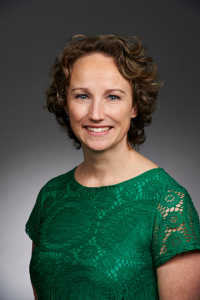
CHRISTINE ALBERT
Marketing & Events Specialist